


Buying guide · Copper vs steel
Copper water bottle vs stainless steel: both replace plastic, but they do very different jobs. Here is how they compare on what touches your water, temperature, care and price, and which one fits your day.
By the Neera Living team · Updated October 2026 · 6 min read
Disclosure: Neera Living makes copper water bottles. We also say plainly where stainless steel is the better choice.
The short answer
Choose a copper water bottle if you want plain water to rest against bare copper overnight and drink it in the morning, the Ayurvedic ritual called Tamra Jal. Choose stainless steel if you need ice-cold or hot drinks for hours, carry juice, coffee or sports drinks, or want to put the bottle in the dishwasher. Copper is single-wall and reacts with acidic drinks; stainless steel is inert and often insulated. Many people use both: copper on the nightstand, steel in the gym bag.
Copper vs stainless steel at a glance
| What matters | Copper bottle | Stainless steel bottle |
|---|---|---|
| What touches the water | Bare copper (if unlined) | Stainless steel, usually food-grade 18/8 |
| Adds anything to the water | A trace of copper (about 0.18 mg per litre after 16 hours in a lab study) | No, it is non-reactive |
| Keeps drinks cold or hot | No, single-wall metal | Yes, if it is a double-wall vacuum bottle |
| Acidic, fizzy or hot drinks | No: plain still water only | Yes |
| Cleaning | Hand wash; lemon and salt inside about once a week | Soap and water; many are dishwasher-safe (check the label) |
| Looks over time | Darkens into a natural patina; can be polished | Stays the same; may dent or scratch |
| Antimicrobial surface | Yes, shown in lab studies on stored water | No |
| Best for | The overnight water ritual at home or at your desk | Gym, hiking, commuting, ice water, coffee and smoothies |
What copper does that steel does not
Copper is not a neutral container. A small amount of the metal moves into water that rests in it, and copper surfaces are hostile to many bacteria.
- Fewer bacteria in stored water. In a 2012 study, drinking water kept 16 hours in copper pots had no recoverable disease-causing bacteria.
- A trace of copper, well within limits. The same study measured about 0.18 mg of copper per litre, under the World Health Organization's drinking-water guideline of 2 mg per litre.
- A ritual, not just a container. In Ayurveda, water rested overnight in copper is called Tamra Jal and is drunk in the morning.
Claims beyond this, such as detox, weight loss or alkaline water, are not supported by research. We go through them in 8 things people get wrong about copper water.
What stainless steel does better
Stainless steel wins on convenience, and it is honest to say so:
- Temperature. A double-wall vacuum bottle keeps ice water cold or tea hot for hours. A copper bottle is single-wall, so water drifts to room temperature and the outside can sweat with cold water.
- Any drink. Steel does not react with juice, coffee, lemon water or electrolyte drinks. Copper should only hold plain water: the US FDA Food Code says copper should not touch food or drink with a pH below 6.
- Low care. Rinse it, or put it in the dishwasher if the maker allows. Copper needs hand washing and a quick lemon-and-salt clean about once a week.
- Rough use. Steel shrugs off drops and trail use. A dent in copper is cosmetic, but a hand-hammered bottle deserves a little more care.
Safety: are both safe for daily use?
Yes, when each is used for what it is made for. Stainless steel is safe with almost any drink. Copper is safe for most healthy adults with plain, cool water rested overnight, refilled daily and cleaned regularly. People with Wilson's disease, liver disease or a doctor's advice to limit copper should ask their doctor first. Full details, with WHO, EPA and NIH limits, are in is it safe to drink from a copper bottle every day.
Watch out for "copper" bottles that are really steel
Some bottles sold as copper are stainless steel inside with copper only on the outside, or have a lacquer or lining between the water and the metal. You get the price of copper with the function of steel. When we cut open nine cheap copper bottles, six were lined inside and seven contained metals other than copper.
A one-minute check: shine a phone light down the neck. You should see bare, reddish-brown metal, not silver steel or a shiny film. A magnet should not stick to pure copper.
Price and lifespan
Copper bottles usually cost more than basic steel bottles: copper is a more expensive metal, and hammered bottles are shaped by hand. Both last for years. A copper bottle that darkens is not worn out; the patina is normal oxidation and comes off with lemon and salt. Compare prices, lab reports and linings across ten copper bottles in our best copper water bottle comparison.
Which one should you buy?
Cu
Choose copper if
You want a morning ritual with water rested overnight, you mostly drink plain water at room temperature, and you don't mind a weekly clean.
Fe
Choose stainless steel if
You need ice-cold or hot drinks, carry coffee, juice or sports drinks, or want something you can throw in a bag and the dishwasher.
Or use both: fill a copper bottle at night for the morning, and carry steel for everything else.

If copper is your pick: bare copper inside
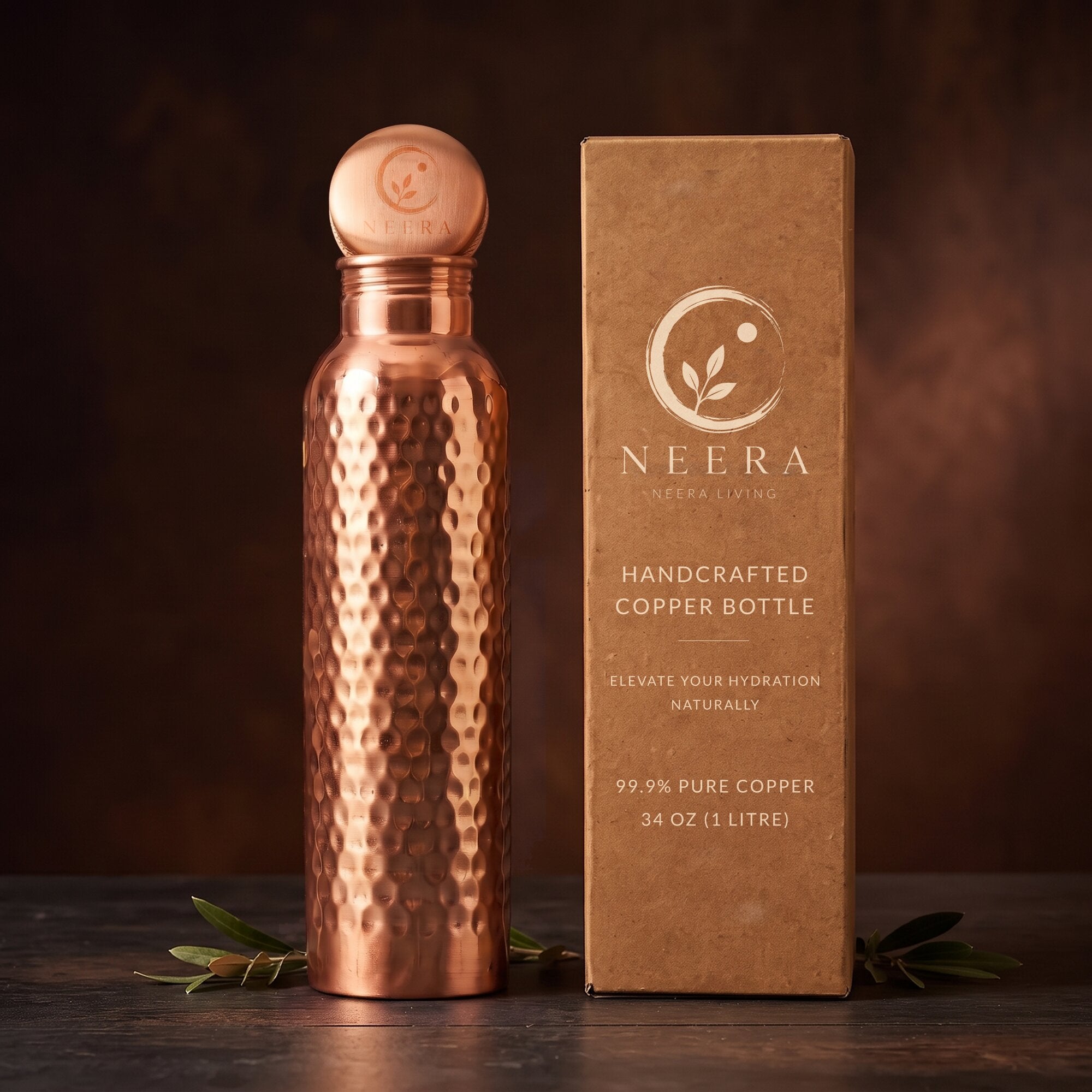
- Over 99.9% copper, SGS lab tested
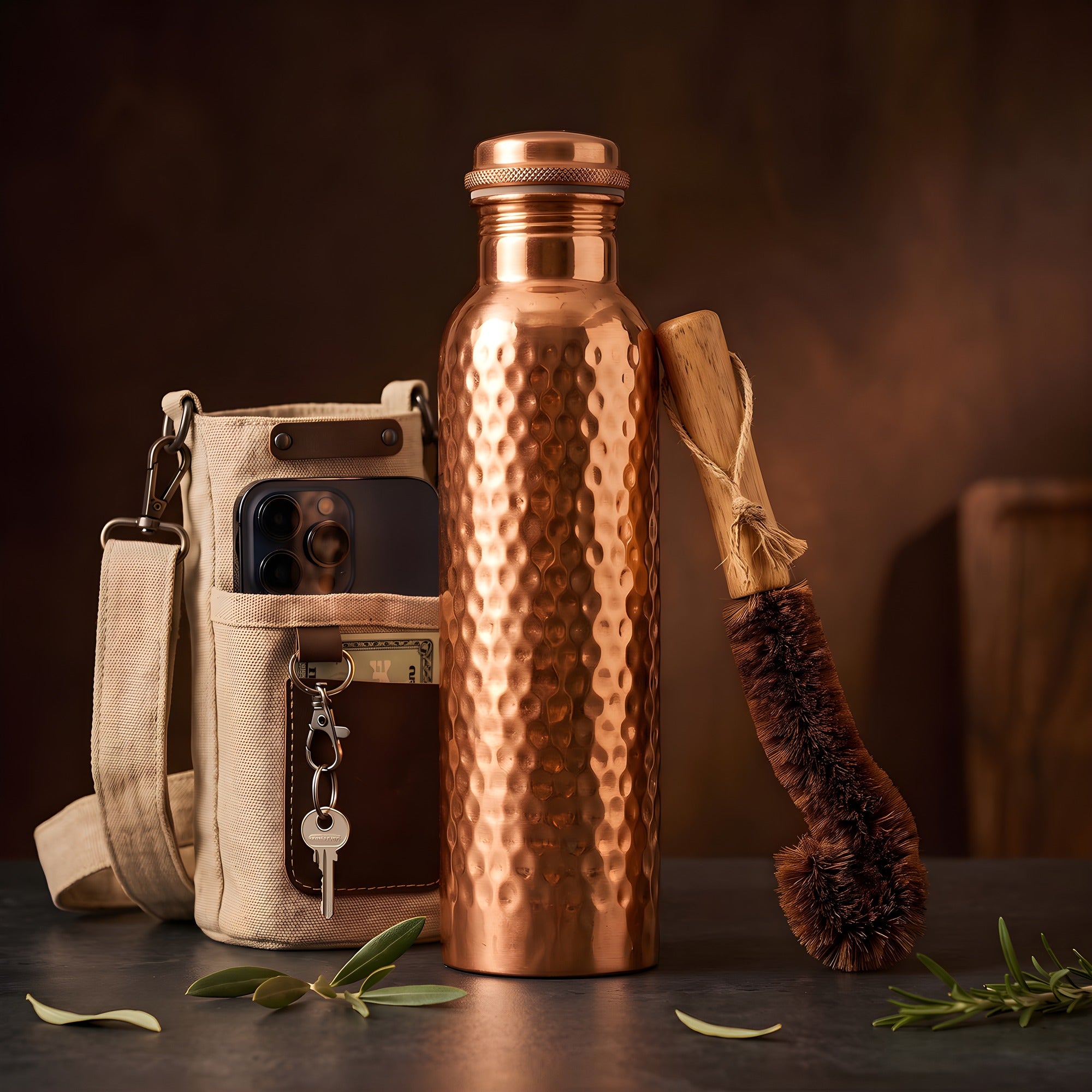
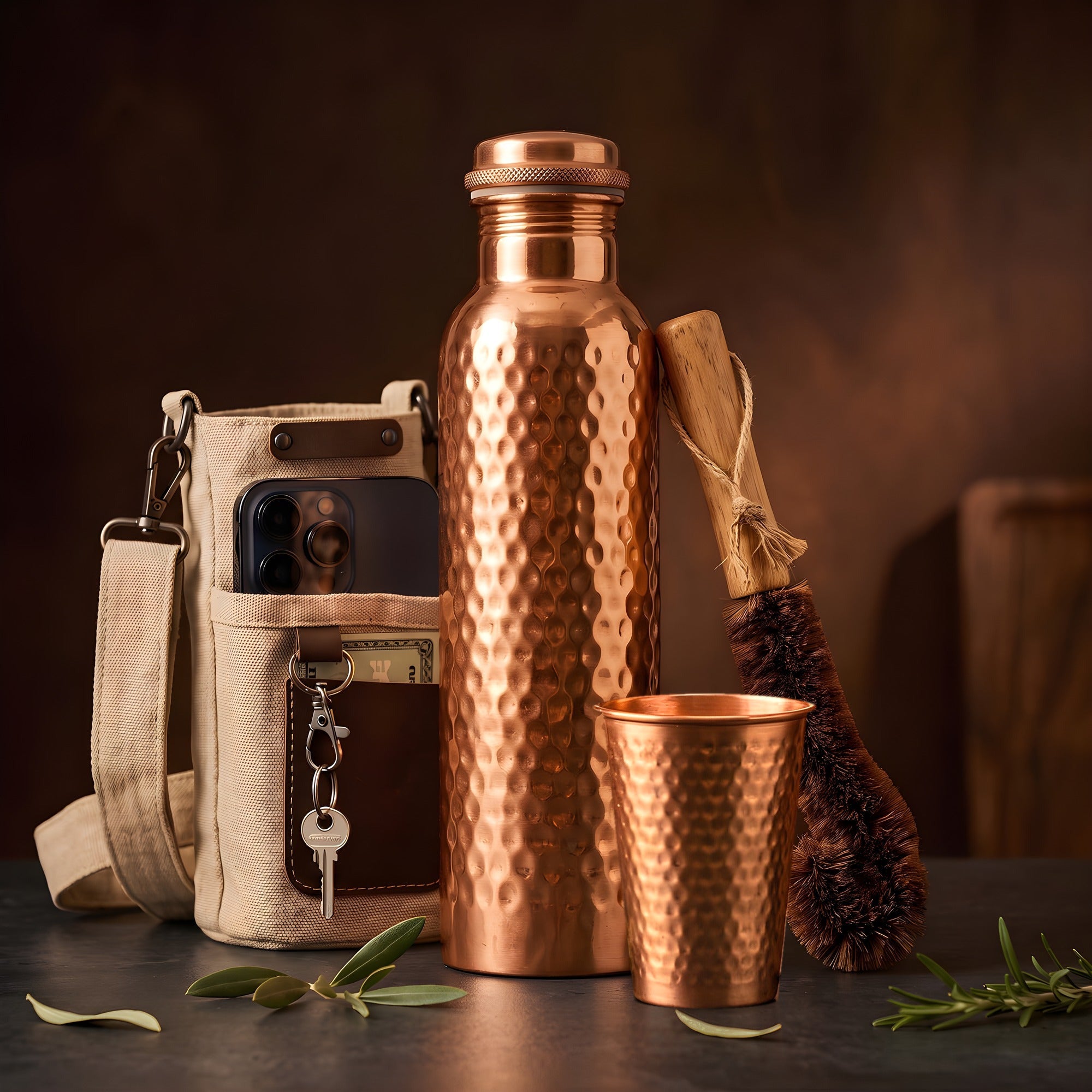
- Hand-hammered in India, unlined inside
- 34 oz (1 litre), threaded copper cap with a seal
- Free shipping from our US warehouse, 60-day guarantee
$59 Bottle · $79 Essentials Set
SEE THE BOTTLE →Extra 10% off with code NEERA10
Frequently asked questions
Is copper or stainless steel better for drinking water?
It depends on the job. Copper is better if you want plain water to rest against copper overnight, which lab studies link to fewer bacteria in the stored water. Stainless steel is better for cold or hot drinks, acidic drinks and low-maintenance everyday carry.
Can I put ice water in a copper water bottle?
Cool water is fine, but a copper bottle is single-wall, so it will not keep water cold and the outside may sweat. For ice water that stays cold, use an insulated stainless steel bottle.
Can I put coffee, juice or lemon water in a copper bottle?
No. Acidic, fizzy and hot drinks draw much more copper out of the metal. The US FDA Food Code says copper should not touch food or drink with a pH below 6. Keep copper for plain water and use steel for everything else.
Is it safe to drink from a copper bottle every day?
For most healthy adults, yes, with plain cool water, an overnight rest and regular cleaning. In a lab study, water stored 16 hours in copper had about 0.18 mg of copper per litre, below the WHO guideline of 2 mg per litre.
Why are copper water bottles more expensive than steel?
Copper costs more than stainless steel, and hammered copper bottles are shaped and finished by hand. Very cheap "copper" bottles are often lined or made from other metals.
Can a copper bottle go in the dishwasher?
No. Hand wash it with mild soap, clean the inside with lemon juice and salt about once a week, rinse with plain water and dry it with the cap off. See the cleaning guide.
Keep reading
Best copper water bottle: 10 compared on purity, lining and price Ayurvedic copper water bottle How much copper water to drink per day Is it safe to drink from a copper bottle every day? We cut open 9 cheap copper bottlesSources: Sudha VBP et al., Storing drinking-water in copper pots kills contaminating diarrhoeagenic bacteria, J Health Popul Nutr, 2012;30(1):17-21 · WHO Guidelines for Drinking-water Quality · US FDA Food Code · NIH Office of Dietary Supplements, Copper fact sheet
This article is for general information only and is not medical advice. If you have a health condition, talk to your doctor before changing what you drink.
